inquiry
Leave A Message
If you are interested in our products and want to know more details,please leave a message here,we will reply you as soon as we can.
submit
banner
Home

Blog

Blog

  • Inside the Automotive Refinish Coatings Factory: How WASHINTA Ensures Quality
    Inside the Automotive Refinish Coatings Factory: How WASHINTA Ensures Quality
    Aug 27, 2025
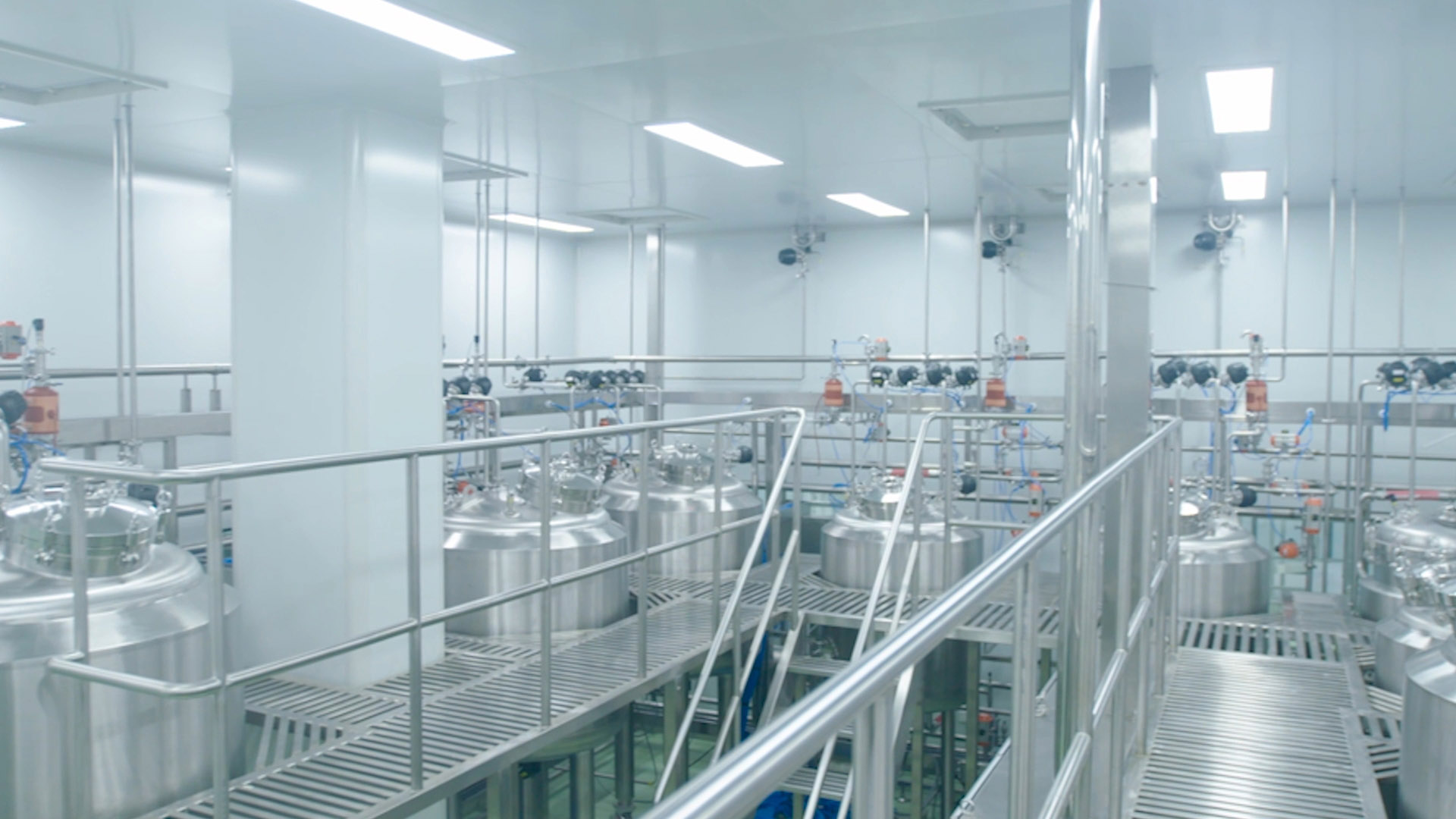
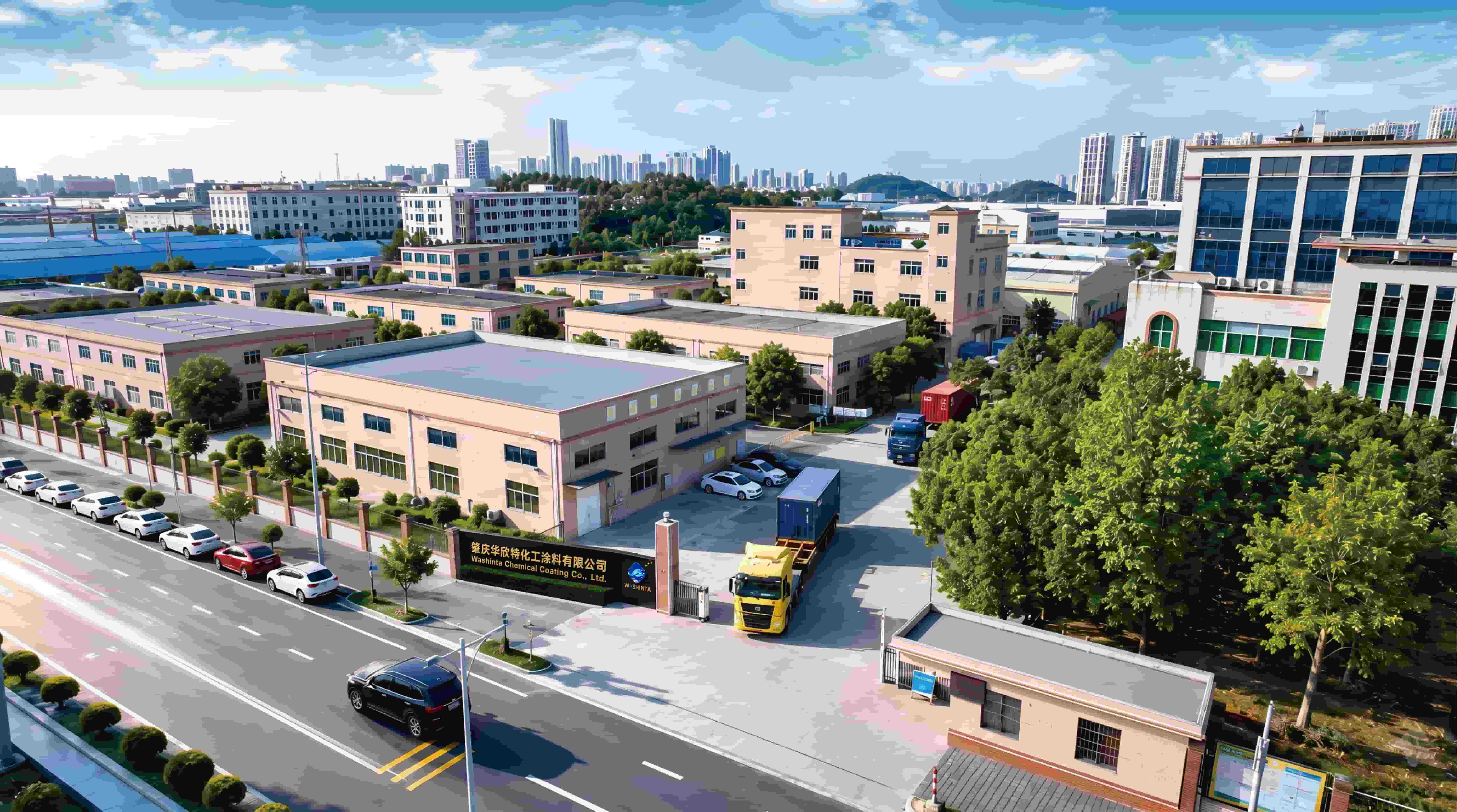
    In the automotive refinish coatings industry, product quality is a key factor in customers’ decision-making. As a professional refinish coatings manufacturer exporting to over 70 countries, WASHINTA always places quality control as the top priority. Today, we’ll take you “inside” our factory to reveal how we ensure that every can of refinish coating meets the highest standards.   1. Strict Selection of Raw Materials   Quality assurance starts at the source:   All our colorants, resins, additives, and solvents come from world-renowned suppliers.   Every batch of raw materials undergoes chemical composition analysis, stability testing, and color inspection before entering the factory to ensure compliance with our standards.   This step guarantees the base performance and long-term color stability of the coatings.   2. Advanced Production Equipment   To ensure uniformity and consistency in every batch, we have invested in modern production lines:   Fully automatic dispersion systems to ensure complete blending of colorants and resins;   High-precision filling equipment to guarantee accurate volume and ratios for every can;   Enclosed production environment to prevent dust and contamination, ensuring pure coatings.   High automation reduces human error and ensures stable, reliable product performance.   3. Strict Process Control   Every production step follows rigorous process standards:   Temperature, humidity, and mixing speed are precisely controlled;   Different types of coatings (solid colors, pearlescent, waterborne) follow independent production processes;   Every batch undergoes quality inspections, including viscosity, drying time, gloss, and adhesion tests.   Only products that pass all tests proceed to the next stage.   4. Comprehensive Quality Testing   Our laboratory is equipped with advanced instruments:   Spectrophotometers to ensure color matches standard samples;   Weathering testers to check coating stability under high/low temperature and humidity;   Mechanical performance tests to evaluate adhesion, hardness, and impact resistance.   Every can of coating undergoes multiple tests to ensure excellent performance in the customer’s hands.   5. Continuous Improvement and R&D Support   Quality is not only about production control—it also relies on continuous R&D:   Our professional R&D team continually optimizes formulas to improve color matching accuracy and coating durability;   Customer feedback is directly used to refine production processes, forming a closed-loop quality management system;   The application of new materials and technologies keeps our products at the forefront of the market.   Conclusion   The quality of automotive refinish coatings determines repair results and customer satisfaction. From raw material selection, production equipment, process control, to rigorous testing and R&D support, we ensure the high quality of every can of coating through strict control at every step.   Choosing a professional refinish coatings manufacturer means choosing reliability, safety, and efficiency.
    Read More
  • Top 10 Most Difficult EV Colors to Match in 2026
    Top 10 Most Difficult EV Colors to Match in 2026
    Jul 17, 2026
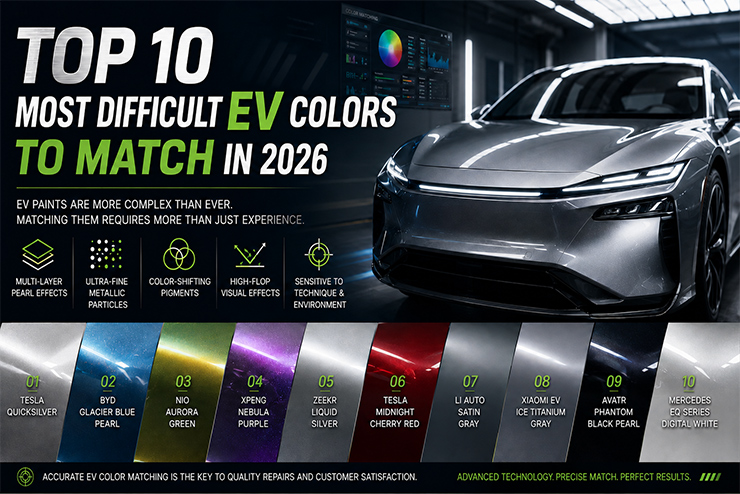
    As electric vehicles continue to dominate global automotive markets, body shops are facing a new challenge: EV paint colors are becoming significantly more difficult to repair and match. Unlike traditional solid colors, many modern EV finishes feature: Ultra-fine metallic particles Multi-layer pearl effects Transparent tinted coatings Color-shifting pigments High-flop visual effects under different lighting angles For automotive refinishing professionals, achieving a perfect color match on modern EVs now requires more advanced color databases, spectrophotometers, and intelligent mixing systems than ever before. Here are the Top 10 most difficult EV colors to match in 2026. 1. Tesla Quicksilver Tesla’s Quicksilver remains one of the most challenging colors in the industry. Why It’s Difficult: Extremely fine aluminum metallic particles Strong brightness variation under lighting Sensitive spray pressure and application technique High flop effect from different viewing angles Even slight differences in spray gun distance or atomization can noticeably change the final appearance. 2. BYD Glacier Blue Pearl BYD has rapidly expanded globally, and Glacier Blue Pearl has become a common repair challenge for body shops. Why It’s Difficult: Multi-layer pearl structure Transparent blue tint effect Color shifts heavily between sunlight and indoor lighting Difficult blend transitions Many traditional paint databases still lack stable formula coverage for newer BYD colors. 3. NIO Aurora Green NIO’s premium EV finishes are designed with luxury-level visual depth. Why It’s Difficult: High chromatic pearl pigments Green-to-gold color movement Strong sensitivity to film thickness Requires extremely controlled blending technique This color often appears different depending on viewing distance and weather conditions. 4. XPENG Nebula Purple Nebula Purple is one of the most visually dynamic EV colors released in recent years. Why It’s Difficult: Multi-angle color-changing effect Violet and blue interference pearls Difficult orientation control of metallic particles Easy to create patchiness during repair Without accurate formula data and spray-out verification, repairs can become highly inconsistent. 5. Zeekr Liquid Silver Silver has always been difficult in automotive refinishing, but Zeekr’s Liquid Silver takes complexity to another level. Why It’s Difficult: Ultra-bright metallic reflection Highly uniform particle arrangement required Strong sensitivity to reducer speed and air pressure Visible mismatch even with slight metallic orientation changes This color is especially difficult on large side panels and doors. 6. Tesla Midnight Cherry Red Tesla’s Midnight Cherry Red combines deep candy-style transparency with layered metallic effects. Why It’s Difficult: Semi-transparent red layer Strong depth perception effect Requires precise layer control Difficult to reproduce factory richness Repairing this finish often requires advanced blending skills and accurate spray-out cards. 7. Li Auto Satin Gray Matte and satin EV finishes continue growing in popularity. Why It’s Difficult: Surface texture affects final appearance Gloss level consistency is critical Spot repairs are extremely difficult Small blending errors become highly visible Unlike gloss finishes, matte repairs cannot rely on polishing to correct defects. 8. Xiaomi EV Ice Titanium Gray As Xiaomi enters the EV market, its modern technology-inspired colors are gaining attention. Why It’s Difficult: Fine titanium metallic particles Strong cool-tone reflection Highly angle-sensitive brightness Demands accurate spectrophotometer readings This color can appear completely different under LED lighting versus natural daylight. 9. Avatr Phantom Black Pearl Black colors may appear simple, but modern pearl blacks are among the hardest finishes to repair perfectly. Why It’s Difficult: Hidden blue and purple pearl layers Extremely sensitive to texture differences Clearcoat thickness strongly affects appearance Difficult to maintain consistent gloss depth Even minor sanding or blending variations become visible under sunlight. 10. Mercedes EQ Series Digital White Luxury EV brands are introducing highly refined whites with hidden pearl structures. Why It’s Difficult: Multiple pearl particle sizes Extremely clean color requirement Sensitive to contamination and toner imbalance Difficult coverage consistency White colors are unforgiving — even small formula inaccuracies can create visible panel differences. Why EV Colors Are Becoming Harder to Match Modern EV manufacturers are using advanced color technologies to create stronger visual identity and futuristic appearance. Compared with traditional automotive colors, EV finishes now feature: More complex pigments More pearl layers Stronger flop effects More transparent color structures Faster color updates between model years As a result, traditional refinishing systems are struggling to keep up. How Professional Body Shops Improve EV Color Matching To successfully repair modern EV finishes, body shops increasingly rely on: AI-assisted color matching systems Spectrophotometers Large global color formula databases Continuous EV color updates Spray-out card verification Advanced blending techniques The ability to accurately repair EV colors is quickly becoming a major competitive advantage for body shops worldwide. The Future of Automotive Color Matching As EV design continues evolving, automotive paint technology will become even more sophisticated. Body shops that invest in modern color matching solutions today will be better prepared for: New EV color trends Faster repair cycles Reduced rework Higher customer satisfaction In 2026 and beyond, accurate EV color matching is no longer optional — it is essential for profitable automotive refinishing operations.  
    Read More
  • How to Choose the Best Automotive Refinish Paint Manufacturer in China
    How to Choose the Best Automotive Refinish Paint Manufacturer in China
    Jul 17, 2026
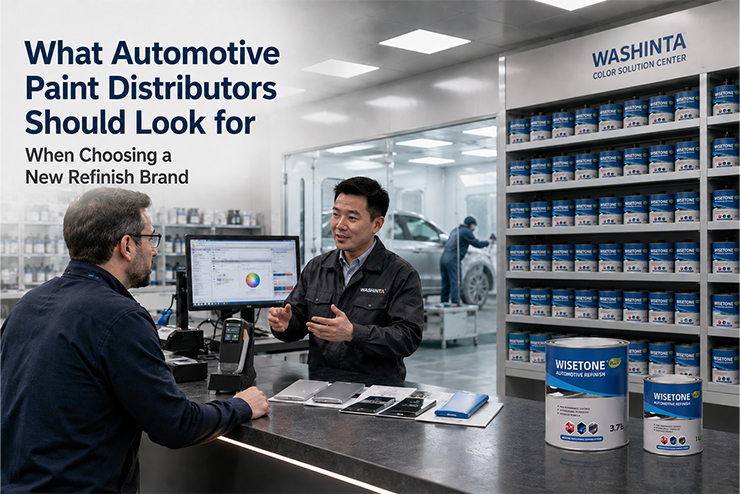
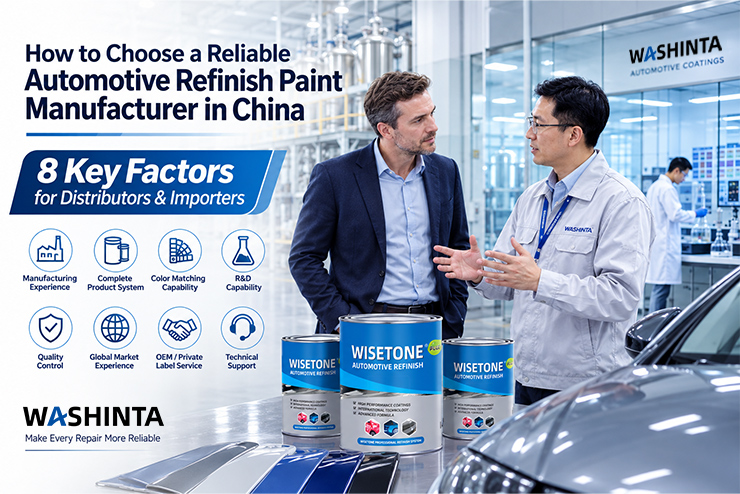
      Introduction   China has become one of the world's leading manufacturing hubs for automotive refinish paint. Today, thousands of distributors, importers, wholesalers, and private-label brands source automotive refinishing products from Chinese manufacturers due to competitive pricing, advanced production technology, and continuous product innovation.   However, not all manufacturers offer the same level of quality, technical expertise, or long-term business support. Choosing the wrong supplier can result in inconsistent product quality, delayed shipments, poor color accuracy, and dissatisfied customers.   Whether you are planning to launch your own automotive paint brand, expand your product portfolio, or become a regional distributor, selecting the right manufacturing partner is one of the most important business decisions you will make.   In this comprehensive guide, we will explain the key factors every buyer should evaluate before selecting an automotive refinish paint manufacturer in China. You'll also learn what separates a reliable long-term partner from an ordinary supplier. Why Are More Global Buyers Choosing Automotive Paint Manufacturers in China?   Over the past two decades, China has evolved from a low-cost manufacturing base into one of the world's most advanced automotive coatings production centers.   Many international automotive refinish paint brands now cooperate with Chinese factories for OEM manufacturing, product development, and global distribution. Continuous investment in production equipment, research laboratories, and quality management systems has enabled Chinese manufacturers to supply products that meet international market requirements.   Today, buyers from Latin America, Southeast Asia, the Middle East, Africa, and Eastern Europe increasingly choose Chinese suppliers because they offer:   Competitive manufacturing costs Stable production capacity Flexible OEM and private label services Complete automotive refinish product systems Faster product development Professional export experience Continuous technical support   For distributors, partnering with the right Chinese manufacturer can improve profitability while maintaining consistent product quality for customers.   What Makes a Professional Automotive Refinish Paint Manufacturer?   Choosing a supplier should never be based solely on price.   Professional manufacturers invest heavily in research, quality control, production management, and customer support to ensure long-term business success.   Below are the most important factors every buyer should consider.   1. Manufacturing Experience   Experience is one of the strongest indicators of a manufacturer's reliability.   Automotive refinish coatings require years of formulation expertise, production management, and market feedback. Manufacturers with decades of experience are generally better equipped to produce consistent products, solve technical challenges, and adapt to changing market demands.   When evaluating a supplier, ask questions such as:   How many years have they specialized in automotive refinish paint? Do they manufacture products themselves? Have they supplied international markets? Can they provide long-term technical support?   A manufacturer with extensive industry experience is more likely to become a stable long-term partner rather than simply a product supplier.   2. Complete Product Portfolio   Professional distributors prefer manufacturers capable of supplying an entire automotive refinishing system rather than individual products.   A complete product range typically includes:   Automotive Color Toners HS & MS Clearcoats Hardeners Thinners Primers Polyester Putty Plastic Primer Degreasers Spot Repair Products Color Matching Software Spectrophotometer Integration   Working with a single supplier helps ensure compatibility between products while simplifying purchasing, logistics, and technical support.   3. Product Quality and Consistency   Consistent quality is essential for building customer trust.   Professional manufacturers implement strict quality control throughout every stage of production, including:   Raw material inspection Formula verification Batch consistency testing Viscosity control Gloss measurement Adhesion testing Drying performance evaluation Packaging inspection 4. Production Capacity and Manufacturing Facilities Production capacity is often overlooked when selecting an automotive refinish paint manufacturer, yet it directly affects delivery reliability, product consistency, and your ability to grow your business. A professional manufacturer should have modern production facilities capable of meeting both small and large-volume orders without compromising quality. When evaluating a factory, consider asking: What is the annual production capacity? How many production lines are in operation? Can the factory handle seasonal demand increases? What is the average lead time for OEM orders? Are production and packaging completed in-house? If possible, request a factory tour or a live video inspection. Seeing the production lines, raw material storage, laboratories, and packaging facilities provides valuable insight into the manufacturer's capabilities. A well-organized factory demonstrates professionalism, efficient management, and a long-term commitment to quality. 5. Research and Development Capabilities The automotive industry is constantly evolving. New vehicle models, paint technologies, environmental regulations, and customer expectations require manufacturers to continuously improve their products. A reliable automotive refinish paint manufacturer should have a dedicated research and development (R&D) team capable of: Developing new products Improving existing formulas Testing raw materials Meeting international VOC requirements Supporting OEM customization Responding quickly to market changes Innovation is especially important as electric vehicles introduce more complex factory colors and special-effect finishes. Manufacturers that invest in R&D are better prepared to support distributors in highly competitive markets. 6. Color Matching Technology Is Becoming More Important Than Ever One of the biggest challenges facing modern body shops is accurate color matching. Today's vehicles feature increasingly sophisticated colors, including: Pearl finishes Metallic colors Xirallic effects Three-stage paints Matte finishes High-chroma colors These finishes require more than traditional color cards or manual adjustments. Leading manufacturers now provide intelligent color matching solutions that combine: Digital color formula databases Spectrophotometer integration AI-assisted formula correction Continuous software updates Cloud-based color management This technology helps body shops reduce repainting, improve first-time match accuracy, and minimize paint waste. For distributors, offering advanced color matching solutions adds significant value beyond simply selling paint products. 7. Chinese EV Colors Are Creating New Business Opportunities The rapid expansion of Chinese electric vehicle brands is changing the global automotive refinish market. Brands such as: BYD NIO XPENG Li Auto Zeekr are now exported to dozens of countries across Latin America, Southeast Asia, the Middle East, Europe, and Africa. As these vehicles become more common on local roads, repair shops face a growing challenge: accurately matching newly developed OEM colors. Many traditional color databases cannot fully support these newer vehicle colors, leading to longer repair times and customer dissatisfaction. When choosing a manufacturer, ask whether they continuously update their color database to include the latest Chinese EV colors. Manufacturers that invest in modern color matching technology can help distributors stay ahead of future market demand. 8. OEM and Private Label Services Many importers prefer selling products under their own brand instead of distributing an existing manufacturer brand. A professional automotive paint manufacturer should offer comprehensive OEM and private label services, including: Custom branding Label design Packaging customization Formula adjustment Marketing materials Product documentation Technical training Before selecting an OEM partner, ask: What is the minimum order quantity (MOQ)? Can packaging sizes be customized? Are multilingual labels available? Can the factory provide design support? How long does OEM production take? Choosing an experienced OEM manufacturer allows you to build a unique brand while benefiting from established production expertise. 9. International Certifications and Quality Management Certifications demonstrate that a manufacturer follows recognized quality management standards. Although certification requirements vary by market, buyers should verify whether the factory operates under internationally recognized systems. Common certifications include: ISO 9001 Quality Management ISO 14001 Environmental Management IATF 16949 Automotive Quality Management REACH compliance (where applicable) VOC compliance for target markets In addition to certifications, ask whether products undergo regular laboratory testing for: Adhesion Hardness Gloss retention Weather resistance Chemical resistance Drying performance Durability Reliable testing procedures reduce quality risks and improve customer satisfaction. 10. Export Experience Matters Manufacturing high-quality paint is only part of the equation. An experienced exporter understands the documentation, packaging, and logistics required for international shipments. Professional exporters should be able to provide: Technical Data Sheets (TDS) Safety Data Sheets (SDS/MSDS) Certificates of Origin Packing Lists Commercial Invoices Export Labels Dangerous Goods documentation (when required) Experienced suppliers are also familiar with shipping regulations and can help buyers avoid unnecessary customs delays. For first-time importers, this level of support is particularly valuable. 11. Technical Support After the Sale Many buyers focus only on price and overlook after-sales service. However, technical support becomes essential when introducing new products into a market. A professional manufacturer should offer assistance such as: Product application guidance Mixing ratio recommendations Troubleshooting Color matching assistance Marketing support Distributor training Online technical consultation Long-term technical support helps distributors build customer confidence while reducing complaints and product misuse.   Strong after-sales service is often what separates strategic partners from ordinary suppliers. 12. How to Identify a Real Automotive Paint Manufacturer vs. a Trading Company Not every company that claims to be a manufacturer actually owns a production facility. Many businesses are trading companies that source products from third-party factories. Working with a trading company is not necessarily a bad choice, but if your goal is long-term cooperation, OEM production, or exclusive distribution, partnering directly with a manufacturer usually provides greater advantages. Here are a few ways to identify a genuine manufacturer: Request a factory tour or live video inspection. Ask for photos or videos of production lines, laboratories, and warehouses. Verify whether the company develops its own formulations. Check if technical documents and product data sheets are created by the factory. Confirm whether OEM packaging is completed in-house. Review the company's manufacturing history and export experience. A transparent manufacturer will generally be happy to demonstrate its facilities and production capabilities. 13. Questions Every Buyer Should Ask Before Choosing a Supplier Before making a purchasing decision, prepare a checklist of key questions. Examples include: How many years have you specialized in automotive refinish paint? What products do you manufacture? Do you provide OEM or private label services? What certifications does your factory hold? What is your standard production lead time? Can you supply Technical Data Sheets (TDS) and Safety Data Sheets (SDS/MSDS)? What quality control procedures are used? Can you provide technical training? How often is your color formula database updated? Which countries do you currently export to? The answers to these questions will help you compare suppliers objectively instead of relying only on price. 14. Common Mistakes Buyers Should Avoid Many importers focus almost entirely on the lowest quotation. While competitive pricing is important, choosing a supplier based only on price often leads to higher long-term costs. Common mistakes include: Choosing the cheapest supplier Low prices may indicate inconsistent raw materials, limited quality control, or inadequate technical support. Ignoring color matching capabilities As vehicle colors become increasingly complex, accurate color matching has become one of the most important competitive advantages. Buying only individual products Purchasing clearcoat from one supplier and hardener from another may result in compatibility issues. Whenever possible, select a manufacturer capable of supplying a complete automotive refinish system. Overlooking after-sales support Technical assistance, distributor training, and application guidance can significantly improve customer satisfaction. Failing to evaluate long-term partnership potential The best supplier is not necessarily the one with the lowest price—it is the one that consistently helps your business grow. 15. Why Long-Term Partnerships Create More Value Successful distributors rarely change suppliers every year. Long-term cooperation offers many benefits, including: Stable product quality Better purchasing conditions Faster technical support Customized product development Marketing assistance Exclusive distribution opportunities Stronger customer confidence When both parties invest in a long-term relationship, they can grow together and respond more effectively to changing market demands. 16. Why More International Customers Choose Washinta Choosing the right automotive refinish paint manufacturer is about more than selecting products—it is about finding a partner committed to your long-term success. With more than 30 years of manufacturing experience, Washinta has built a reputation for delivering professional automotive refinish solutions to customers in over 70 countries and regions. Our product portfolio includes: Automotive Color Toners High-Performance Clearcoats Primers Hardeners Thinners Complete Automotive Refinish Systems To help distributors and body shops improve efficiency, we also provide the WISETONE PLUS Intelligent Color Mixing System, featuring: More than 100,000 color formulas Continuous database updates Support for the latest Chinese EV colors AI-assisted color correction Multi-language software Compatibility with professional spectrophotometers Whether you are looking for OEM manufacturing, private label production, or a reliable long-term supplier, Washinta is committed to delivering consistent quality, technical innovation, and dependable customer support. Conclusion China has become one of the world's leading sources for automotive refinish paint, offering buyers a wide range of manufacturing options. However, choosing the right supplier requires more than comparing prices. By carefully evaluating manufacturing experience, production capacity, product quality, research and development, color matching technology, OEM capabilities, certifications, export experience, and after-sales support, you can build a stronger and more profitable business.   A reliable manufacturing partner will not only supply products but also contribute to your long-term growth in an increasingly competitive automotive refinishing market.
    Read More
  • Visit WISETONE PLUS at INA PAACE Automechanika Mexico 2026 – Meet Your Trusted Automotive Refinish Paint Manufacturer
    Visit WISETONE PLUS at INA PAACE Automechanika Mexico 2026 – Meet Your Trusted Automotive Refinish Paint Manufacturer
    Jul 07, 2026
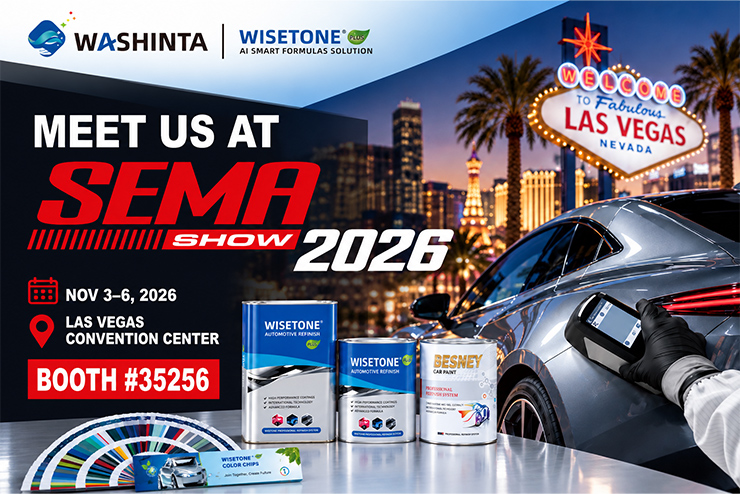
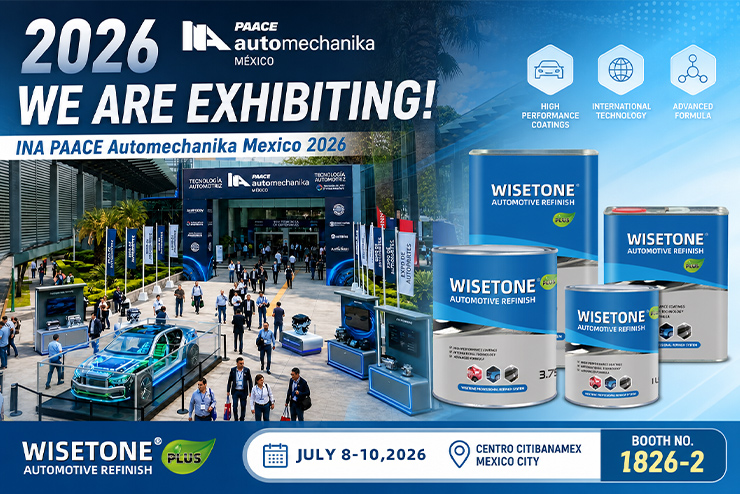
    Date: July 8–10, 2026 Booth No.: 1826-2 Hall 18   Meet WISETONE PLUS in Mexico!   WISETONE PLUS, the premium automotive refinish paint brand from Washinta, is excited to announce our participation in INA PAACE Automechanika Mexico 2026, one of the largest automotive aftermarket exhibitions in Latin America.   Together with our valued Mexican partner, we warmly invite distributors, importers, wholesalers, body shop owners, and automotive refinishing professionals to visit us and explore new business opportunities.   If you are looking for a reliable automotive refinish paint manufacturer, this is the perfect opportunity to meet our team face-to-face.   Discover Our Complete Automotive Refinish Solutions   At our booth, you will discover a full range of professional automotive refinishing products, including:   Automotive Color Toners 2K Clearcoats Primers Hardeners Thinners Low VOC Automotive Paint Systems WISETONE PLUS Color Mixing System AI Color Matching Technology Spectrophotometer Solutions   Our products are trusted by customers in more than 70 countries, helping distributors and body shops achieve accurate color matching, consistent quality, and higher repair efficiency.   Experience Our Advanced Color Matching Technology   One of the highlights at our booth will be the WISETONE PLUS Intelligent Color Matching System.   Visitors will experience:   Over 100,000+ color formulas Continuous formula database updates Chinese EV color coverage AI-assisted color correction Fast and accurate color matching Multi-language software support   As Chinese electric vehicles continue expanding into global markets, accurate color matching has become more important than ever. Our intelligent system helps body shops repair modern vehicle colors with greater confidence and efficiency.   Looking for Automotive Paint Distributors in Latin America   As part of our global expansion strategy, we are actively seeking:   Exclusive Distributors Regional Agents Importers Wholesalers Strategic Business Partners   We welcome partners from:   Mexico Guatemala Costa Rica Panama Colombia Ecuador Peru Chile Argentina Brazil Uruguay Paraguay Bolivia Dominican Republic Honduras El Salvador Nicaragua Belize   If you are interested in representing a professional automotive refinish paint brand, our team would be pleased to discuss exclusive cooperation opportunities during the exhibition.   Why Choose Washinta?   With more than 30 years of manufacturing experience, Washinta has become a trusted OEM and automotive refinishing solutions provider for customers around the world.   We offer:   Stable factory production OEM & Private Label Services Professional R&D Team Strict Quality Control International Certifications Fast Production & Delivery Technical Training and Marketing Support Continuous Product Innovation   Whether you are building your own automotive paint brand or expanding your existing business, Washinta provides reliable products and long-term partnership support.
    Read More
  • How to Eliminate Blend Lines in Automotive Spot Repairs: The Benefits of Seamless Clearcoat Technology
    How to Eliminate Blend Lines in Automotive Spot Repairs: The Benefits of Seamless Clearcoat Technology
    Jun 24, 2026
    Introduction In automotive refinishing, achieving an invisible repair is one of the biggest challenges for body shops and paint technicians. Even when the color match is accurate, the repair area may still reveal visible blend lines, whitening effects, texture differences, or gloss inconsistencies. These imperfections often result in customer complaints, additional polishing, and costly rework. As repair efficiency becomes increasingly important, many professional body shops are looking for a better solution. This is where Seamless Clearcoat Technology comes into play. In this article, we will explore the causes of blend lines and how advanced seamless clearcoat products such as WB-340 Seamless Clearcoat help body shops achieve factory-like repair results. What Causes Blend Lines During Spot Repairs? A blend line is the visible transition between the repaired area and the original coating. Common causes include: Uneven clearcoat application Different film thickness between old and new coatings Poor edge melting performance Incompatible clearcoat formulations Insufficient polishing after repair When blend lines remain visible, technicians often need additional sanding and polishing, increasing labor costs and repair time. Why Blend Lines Are a Problem for Body Shops Visible blend lines can create several challenges: Increased Rework Costs Technicians may need to repeat polishing or even repaint the panel. Reduced Workshop Efficiency Additional repair steps reduce productivity and delay vehicle delivery. Customer Dissatisfaction Vehicle owners expect a repair that is virtually invisible. Any visible repair edge can affect customer confidence. Material Waste More labor, clearcoat, and polishing materials are consumed when repairs need correction. What Is Seamless Clearcoat Technology? Seamless Clearcoat Technology is designed to create a smooth and invisible transition between the repaired area and the original paint surface. Unlike conventional clearcoats, advanced seamless clearcoats provide: Superior edge melting performance Better flow and leveling Consistent gloss appearance Natural texture matching Faster spot repair capability The goal is simple: eliminate visible blend lines while reducing repair time. WB-340 Seamless Clearcoat: Designed for Professional Spot Repairs WB-340 Seamless Clearcoat is specifically developed to solve common blend line challenges in automotive refinishing. Key advantages include: Seamless Finish The transition area becomes virtually invisible after application. Excellent Adhesion Provides strong bonding performance on properly prepared surfaces. Fast Spot Repair Helps technicians complete repairs more efficiently and reduce labor time. OEM Texture Matching Designed to blend naturally with original factory finishes. High Gloss Appearance Delivers a smooth and professional finish with excellent visual depth. How WB-340 Helps Body Shops Improve Profitability Professional body shops can benefit from: Reduced rework rates Faster repair cycles Lower material consumption Higher customer satisfaction Improved workshop productivity By minimizing blend line issues, technicians can focus on delivering quality repairs while increasing overall operational efficiency. Best Practices for Achieving Seamless Spot Repairs For optimal results: Properly prepare and clean the repair area. Follow recommended mixing ratios. Apply clearcoat evenly with correct spray gun settings. Allow proper flash-off and curing times. Perform final polishing if required. Combining correct application techniques with a high-performance seamless clearcoat significantly improves repair quality. Conclusion Blend lines remain one of the most common challenges in automotive refinishing. They can increase costs, reduce efficiency, and negatively impact customer satisfaction. Advanced products such as WB-340 Seamless Clearcoat provide an effective solution by delivering invisible repair transitions, excellent gloss retention, and OEM-like appearance. For body shops seeking faster repairs and professional results, seamless clearcoat technology is becoming an essential part of modern automotive refinishing. Interested in learning more about WB-340 Seamless Clearcoat? Contact our team today to request a product demonstration, technical support, or distributor information.
    Read More
  • Difference Between HS, HHS and UHS Clearcoat
    Difference Between HS, HHS and UHS Clearcoat
    Jun 10, 2026
    In the automotive refinishing industry, clearcoat selection plays a major role in determining final appearance, durability, repair efficiency, and overall paint performance. When choosing a clearcoat system, body shops and distributors often encounter terms such as: HS Clearcoat HHS Clearcoat UHS Clearcoat But what do these terms actually mean? More importantly: Which one provides better gloss? Which one dries faster? Which one offers better durability? Which one is more suitable for modern body shop operations? In this article, we explain the key differences between HS, HHS, and UHS clearcoats and how each system is used in automotive refinishing. What Does HS, HHS and UHS Mean? These terms mainly refer to the solid content level inside the clearcoat. “Solid content” means the amount of actual coating material that remains on the vehicle surface after solvents evaporate. Generally: Higher solid content = thicker paint film Lower solvent content = lower VOC emissions Better fullness and gloss performance 1. HS Clearcoat (High Solid) HS clearcoat is one of the most common automotive refinishing clearcoat systems. It provides a good balance between: application ease gloss drying speed cost efficiency Typical Characteristics: Medium-to-high solid content Smooth application Good leveling performance Suitable for general repair work Widely used in body shops worldwide Advantages: Easy spraying process Stable performance Cost-effective Good appearance quality Limitations: Lower film build compared with HHS or UHS Slightly lower gloss depth May require additional coats for premium finish results HS systems remain very popular for standard collision repair and daily refinishing operations. 2. HHS Clearcoat (Higher High Solid) HHS clearcoat is an upgraded version of traditional HS systems. It contains higher solid content and provides improved: gloss fullness film thickness durability HHS clearcoats are becoming increasingly popular in modern professional body shops. Typical Characteristics: Higher solid concentration Lower solvent ratio Better build per coat Stronger visual depth Improved anti-shrink performance Advantages: Excellent gloss and clarity Better fullness effect Reduced risk of shrinkage Strong durability Better leveling performance Higher transfer efficiency Limitations: Slightly higher viscosity Requires proper spray technique Material cost may be higher than standard HS HHS clearcoat is often preferred for: premium refinishing work high-end vehicles EV repairs professional body shop operations It offers a strong balance between appearance quality and operational efficiency. 3. UHS Clearcoat (Ultra High Solid) UHS clearcoat represents one of the highest solid-content technologies in automotive refinishing. It is designed for: maximum film build ultra-low VOC compliance premium finish quality high productivity Typical Characteristics: Extremely high solid content Very low solvent level Thick coating build High gloss depth Excellent environmental compliance Advantages: Outstanding gloss and DOI (Distinctness of Image) Very high film thickness Excellent durability Reduced VOC emissions Fewer coats required High production efficiency Limitations: More demanding application process Sensitive to spray technique Higher material viscosity Requires experienced technicians More difficult blending in some repairs UHS systems are commonly used in: premium repair centers OEM-level refinishing environmentally regulated markets luxury vehicle repairs Main Differences Between HS, HHS and UHS Clearcoat Feature HS HHS UHS Solid Content Medium-High High Ultra High Gloss Performance Good Excellent Outstanding Film Build Medium High Very High VOC Level Moderate Lower Lowest Ease of Application Easy Medium More Difficult Fullness Effect Good Strong Very Strong Productivity Standard High Very High Skill Requirement Normal Professional Advanced Why Higher Solid Clearcoats Are Becoming More Popular Modern automotive refinishing trends are moving toward: lower VOC emissions higher efficiency premium appearance quality faster repair turnaround As EV and luxury vehicle markets continue growing, body shops increasingly require: deeper gloss stronger durability reduced shrinkage faster productivity environmentally compliant systems This is one reason why HHS and UHS clearcoats are becoming more widely adopted globally. Which Clearcoat Is Best for Your Body Shop? The best clearcoat depends on: repair volume technician experience local VOC regulations target vehicle market desired finish quality HS Clearcoat: Best for: general repair work standard body shops cost-focused operations HHS Clearcoat: Best for: professional collision centers premium refinishing EV repair shops shops seeking higher gloss and efficiency UHS Clearcoat: Best for: luxury vehicle repairs advanced professional technicians high-end refinishing environments low-VOC regulated markets The Future of Clearcoat Technology Automotive refinishing technology continues evolving rapidly. Modern clearcoat development now focuses on: lower VOC emissions improved gloss retention faster curing anti-scratch performance anti-yellowing technology better compatibility with advanced EV colors As customer expectations rise, body shops increasingly rely on higher-performance clearcoat systems to remain competitive. Final Thoughts Understanding the differences between HS, HHS, and UHS clearcoats is essential for choosing the right refinishing system. Each technology offers unique advantages depending on: repair requirements production speed finish expectations environmental standards For modern body shops, selecting the correct clearcoat system can directly improve: repair quality operational efficiency customer satisfaction long-term profitability
    Read More
  • Meet WISETONE PLUS at INA PAACE Automechanika Mexico City 2026 – BOOTH NO. 1826-2
    Meet WISETONE PLUS at INA PAACE Automechanika Mexico City 2026 – BOOTH NO. 1826-2
    Jun 03, 2026
    Discover Advanced Automotive Refinish Paint Solutions WISETONE PLUS is excited to announce our participation in INA PAACE Automechanika Mexico City 2026, one of the most influential automotive aftermarket exhibitions in Latin America. We warmly welcome automotive paint distributors, importers, body shop owners, paint mixing centers, and industry professionals to visit our booth and discover innovative automotive refinish paint solutions designed for today's rapidly evolving market. Exhibition Information Date: July 8–10, 2026 Venue: Centro Citibanamex, Mexico City, Mexico BOOTH NO. 1826-2 At the exhibition, WISETONE PLUS will present a complete automotive refinish paint system, intelligent color matching technology, and advanced coating solutions that help body shops improve productivity, reduce paint waste, and achieve accurate color matching. Why Choose WISETONE PLUS? Backed by more than 30 years of manufacturing experience, WISETONE PLUS provides reliable automotive refinish paint solutions to customers around the world. Our product range includes: • Basecoat Systems • High Solid Clear Coats • Hardeners • Primers • Putties • Thinners • Industrial Coatings • Intelligent Color Matching Systems Our products are widely used in Europe, North America, Latin America, the Middle East, Africa, and Asia. Intelligent Color Matching for Modern Vehicles The rapid growth of Chinese electric vehicle exports has created new challenges for collision repair centers and body shops worldwide. WISETONE PLUS offers: ✔ More than 100,000 color formulas ✔ AI-assisted color matching technology ✔ Fast formula retrieval ✔ Spectrophotometer integration ✔ Reduced paint waste ✔ Improved workshop efficiency ✔ Accurate color matching for EVs and conventional vehicles Our intelligent color matching solution helps technicians save time while achieving excellent color accuracy. Looking for Distributors in Latin America WISETONE PLUS is actively expanding its distributor network across Latin America. We are seeking long-term partners in: • Mexico • Colombia • Peru • Chile • Ecuador • Guatemala • Costa Rica • Panama • Dominican Republic Whether you are an importer, distributor, body shop supplier, or automotive aftermarket wholesaler, we look forward to discussing new business opportunities. Visit Us at BOOTH NO. 1826-2 Join us at INA PAACE Automechanika Mexico City 2026 and discover how WISETONE PLUS can help grow your automotive refinish business. We look forward to meeting you in Mexico City.
    Read More
  • 5 Reasons Body Shops Lose Profit on Color Matching
    5 Reasons Body Shops Lose Profit on Color Matching
    May 27, 2026
    In today’s competitive automotive refinishing industry, color matching is no longer just a technical process — it directly affects profitability, customer satisfaction, and workshop efficiency. Many body shops focus heavily on labor costs and paint material prices, but often overlook one hidden profit killer: poor color matching. Even small color inaccuracies can lead to expensive rework, wasted materials, delayed delivery times, and dissatisfied customers. Here are five major reasons why body shops lose profit on color matching — and how smarter refinishing systems can solve these problems. ________________________________________ 1. Rework Caused by Inaccurate Color Matching One of the biggest profit losses comes from repainting jobs due to color mismatch. When the repaired panel does not blend correctly with the original vehicle color, technicians must: • Sand the panel again • Remix paint • Repaint and rebake • Spend additional labor hours This process not only wastes paint materials but also reduces workshop productivity. In many cases, one failed color match can occupy a spray booth for several extra hours, delaying other jobs and reducing daily throughput. For high-volume body shops, repeated rework quickly becomes a major operational cost. Solution: Using an advanced automotive color matching system with verified formulas and spectrophotometer support can significantly reduce mismatch rates. ________________________________________ 2. Paint Material Waste Increases Operating Costs Poor color matching often leads to excessive paint consumption. Technicians may repeatedly adjust toners manually in an attempt to achieve a closer match. This trial-and-error process wastes: • Basecoat • Clearcoat • Reducers • Hardeners • Mixing cups and consumables Over time, the cost of wasted materials becomes substantial. For body shops handling multiple repairs daily, even small paint losses per job can add up to thousands of dollars annually. Solution: A smart mixing system with accurate formulas helps technicians achieve the correct color faster, reducing unnecessary material waste. ________________________________________ 3. Modern EV Colors Are More Difficult to Match The rapid growth of electric vehicles has introduced a new challenge for body shops. Modern EV colors often contain: • Fine metallic particles • Multi-layer pearl effects • Special tinted clearcoats • Unique flop and angle-changing effects Many traditional paint databases are not updated quickly enough to cover newer EV colors from brands such as: • BYD • NIO • XPENG • Tesla As a result, technicians spend more time searching for formulas or manually adjusting colors. This increases labor costs and reduces repair efficiency. Solution: Choosing a refinishing system with continuously updated EV color databases and AI-assisted color matching technology can greatly improve repair accuracy. ________________________________________ 4. Slow Repair Turnaround Reduces Shop Capacity Time is money in the refinishing industry. When technicians struggle with color matching, vehicle delivery times become longer. Delays affect: • Workshop scheduling • Customer satisfaction • Insurance repair timelines • Overall shop profitability A body shop that spends extra hours correcting color problems completes fewer vehicles per week. Lower throughput means lower revenue potential. Solution: Efficient color matching systems help technicians identify the correct formula quickly, reducing repair cycle time and increasing workshop productivity. ________________________________________ 5. Customer Trust Is Easily Lost Customers may not understand paint technology, but they immediately notice visible color differences. Even a slight mismatch on a repaired panel can damage customer confidence in the repair quality. Negative customer experiences can lead to: • Complaints • Refund requests • Poor online reviews • Loss of repeat business In highly competitive local markets, reputation is extremely important for body shops. Solution: Consistent and accurate color matching improves finish quality, enhances customer trust, and strengthens long-term business relationships. ________________________________________ The Future of Color Matching Is Smart and Data-Driven As automotive colors become more advanced, traditional manual color matching methods are becoming less efficient. Modern body shops increasingly rely on: • AI-assisted color matching • Spectrophotometers • Large global color databases • EV-specific formulas • Digital mixing systems A smarter refinishing solution not only improves repair quality but also directly increases profitability. ________________________________________ Final Thoughts Color matching problems are not just technical issues — they are business issues. Body shops that reduce rework, minimize paint waste, and improve repair efficiency gain a major competitive advantage in today’s automotive refinishing mark
    Read More
  • China’s EV Export Boom Is Creating New Color Challenges for the Global Automotive Refinish Industry
    China’s EV Export Boom Is Creating New Color Challenges for the Global Automotive Refinish Industry
    May 26, 2026
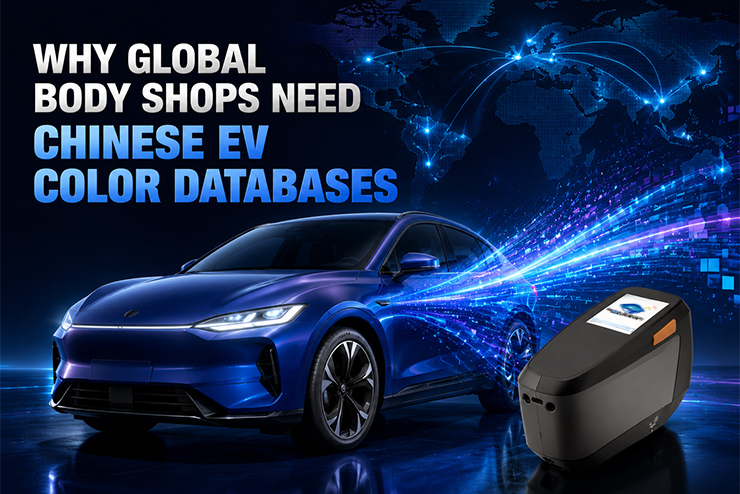
    Chinese Electric Vehicles Are Expanding Rapidly Across Global Markets Over the past few years, China’s electric vehicle (EV) industry has experienced explosive growth, reshaping not only the global automotive manufacturing landscape but also the worldwide automotive aftermarket and refinish industry. According to industry statistics, China’s EV exports have continued to surge at an extraordinary pace. Export volumes increased from approximately 220,000 units in 2020 to more than 3.43 million units in 2025 — a growth of over 15 times in just five years. In the first four months of 2026 alone, exports already reached approximately 1.47 million units, representing year-on-year growth of around 69%. At the same time, countries such as Brazil, the United Kingdom, Australia, Thailand, Germany, Israel, and Mexico are rapidly becoming key overseas growth markets for Chinese electric vehicles. As more Chinese EV brands enter international markets, a new industry trend is becoming increasingly clear: Chinese electric vehicles are not only transforming vehicle sales markets — they are also reshaping the global automotive refinish industry. Every Exported Vehicle Eventually Enters the Repair Market For the automotive refinish industry, vehicle sales are only the beginning. As the number of vehicles on the road continues to grow, demand for collision repair, insurance refinishing, spot repair, and body restoration also increases accordingly. For the past decade, the global automotive refinish market has been largely centered around European, American, and Japanese automotive brands. Today, however, more body shops are encountering Chinese EV brands such as: BYD NIO XPENG ZEEKR AITO AVATR DEEPAL For many overseas body shops and distributors, this represents both a major opportunity and a new technical challenge. Chinese EV Color Systems Are Becoming More Advanced In the EV era, automotive colors are no longer limited to basic white, silver, or black finishes. To enhance brand identity and create a stronger sense of technology and premium styling, Chinese EV manufacturers are continuously introducing new OEM color systems with highly sophisticated visual effects. These new-generation automotive colors often feature: More Complex Metallic Effects Ultra-fine metallic particle technologies create richer visual layers under different lighting conditions. Stronger Pearl Finishes Multi-layer pearl structures produce greater depth, brightness, and premium appearance. Advanced Color-Shift Effects Colors change in tone and brightness depending on viewing angle and lighting. New OEM-Specific Color Platforms Many Chinese EV manufacturers now use independently developed color systems rather than traditional automotive color databases. This creates a major challenge for collision repair shops: Even when the vehicle model can be identified, achieving accurate color matching is no longer easy. Why Traditional Color Mixing Systems Struggle with Chinese EVs Many overseas refinish shops are discovering that traditional color matching systems often face significant limitations when repairing Chinese electric vehicles. Common issues include: Missing Color Formulas New vehicle models are released faster than traditional color databases can update. Inaccurate Spectrophotometer Matching Special pearl and metallic structures often create large color deviations with conventional formulas. Excessive Spray-Out Card Testing Technicians must repeatedly spray test panels to achieve acceptable color accuracy. Higher Rework Rates Color mismatches increase customer complaints and lead to costly repainting work. For body shops, these problems ultimately translate into: Higher labor costs Increased material waste Longer repair cycles Lower workshop productivity Reduced profitability Chinese EV Color Databases Are Becoming a New Competitive Advantage As the global population of Chinese electric vehicles continues to expand, demand for accurate Chinese EV color formulas will grow rapidly across the automotive refinish industry. For distributors and body shops, the ability to access Chinese EV OEM color formulas quickly will become a major competitive advantage. Over the next several years, competition in the automotive refinish industry will gradually shift from: “Do You Have a Color Mixing System?” to: “Do You Have a Complete Chinese EV Color Database?” This shift is already beginning. How WISETONE PLUS Helps Body Shops Adapt to This Trend To support the rapid growth of Chinese electric vehicles worldwide, WISETONE PLUS continues to expand its Chinese EV OEM color database. As a professional automotive refinish paint solution provider serving global markets, we understand where the future of automotive color matching is heading. WISETONE PLUS Advantages Over 100,000+ color formulas Continuous updates for Chinese EV OEM colors Coverage of major Chinese EV brands Smart spectrophotometer integration for faster matching Reduced spray-out testing and lower rework rates Improved color mixing efficiency and repair speed Technical support for distributors and body shops worldwide By combining a more complete automotive color database with highly accurate color matching technology, WISETONE PLUS helps body shops maintain a competitive edge in the EV era. The EV Era Has Already Arrived The rapid growth of Chinese EV exports means more than just increased vehicle sales worldwide. It also means the global automotive refinish industry will soon face increasing demand for advanced color matching solutions. For distributors, body shops, and automotive paint brands, now is the critical time to prepare for the next generation of Chinese EV color technology. The future opportunity lies not only in electric vehicles themselves, but also in the growing repair and refinishing demand behind them. And in this new era, accurate and efficient color matching capability will become one of the most important competitive advantages in the automotive refinish industry. WISETONE PLUS Color Matching System More Chinese EVs. More Color Challenges. More Opportunities.   Stay Ahead with Accurate Chinese EV Color Formulas.
    Read More
  • Can AI Color Matching Systems Really Reduce Paint Waste in Large-Scale Body Shops?
    Can AI Color Matching Systems Really Reduce Paint Waste in Large-Scale Body Shops?
    May 09, 2026
    In today’s automotive refinishing industry, efficiency is no longer just an advantage — it is a necessity. As vehicle colors become more complex and new energy vehicles continue to dominate the market, traditional paint mixing methods are struggling to keep up. For large-scale body shops, paint waste, rework, labor costs, and inconsistent color matching can significantly reduce profitability. So the question is: Can AI color matching systems really reduce paint waste in large-scale body shops? The answer is yes — when the system is designed for speed, precision, and intelligent workflow management. This is exactly why the WISETONE PLUS Intelligent Mixing System was developed. The Biggest Problem in Traditional Automotive Paint Mixing Traditional color matching relies heavily on: Manual color adjustment Technician experience Visual color comparison Trial-and-error mixing While experienced painters may achieve acceptable results, the process is often: Slow Inconsistent Labor-intensive Wasteful In large-scale body shops, even small color matching errors can create: Paint rework Extra material consumption Longer repair cycles Increased labor costs Customer complaints The larger the operation, the greater the losses become. Why Paint Waste Happens in Body Shops Paint waste usually comes from three major issues: 1. Incorrect Color Matching When the formula is inaccurate, technicians must repeatedly adjust the color manually. This leads to: Excess toner usage Multiple spray-out tests Repainting jobs 2. Human Error During Mixing Manual mixing depends heavily on technician skill. Different workers may: Interpret colors differently Add toner inconsistently Use inefficient mixing methods This creates instability in production quality. 3. New Energy Vehicle Colors Are More Difficult Modern EV colors often contain: Special pearls Complex metallic effects Multi-layer color structures Traditional mixing systems cannot efficiently handle these new-generation colors. The Rise of AI Color Matching Systems To solve these industry problems, body shops are increasingly upgrading to intelligent AI-powered refinishing systems. The goal is simple: Faster. More Accurate. Less Waste. The WISETONE PLUS Mixing System was specifically designed around these three core principles. What Makes WISETONE PLUS Different? Unlike traditional systems, WISETONE PLUS combines: AI-assisted color correction Spectrophotometer technology Cloud-based formula databases Automatic paint dispensing Mobile app integration This creates a fully digital refinishing workflow. 100,000+ Color Formulas for Faster Matching Color data is the foundation of accurate refinishing. WISETONE PLUS includes: More than 100,000 color formulas Over 20,000 optimized formula datasets already integrated Daily updates of 50–80 optimized formulas Continuous support for new energy vehicle colors This allows technicians to quickly find the closest formula instead of starting from scratch. As a result: Color matching becomes faster Less toner is wasted Rework is significantly reduced MA-5C Spectrophotometer: Precision in Seconds One of the biggest advantages of the system is the MA-5C spectrophotometer. With just a few seconds of scanning, the device can: Accurately measure vehicle color Analyze color data instantly Connect directly to the WISETONE PLUS system Recommend the closest matching formula The system can also perform AI-assisted formula correction based on the standard color panel, helping achieve an even more precise match. This dramatically improves: Color consistency Workflow efficiency First-pass accuracy Automatic Paint Dispensing Reduces Human Error After selecting the formula, the software sends mixing ratios directly to the automatic paint dispensing machine. Compared with manual mixing, automatic dispensing offers: Higher precision Faster operation Stable repeatability Reduced toner waste This is especially important for large body shops managing high daily workloads. Faster Training for New Technicians Traditional color matching often requires years of experience. With AI-assisted systems: New staff can learn much faster Standardized workflows improve consistency Shops reduce dependence on master technicians WISETONE PLUS allows many technicians to master the system within just 3–4 weeks through standardized training processes. Mobile App Integration for Global Workshops Modern body shops need flexibility. The WISETONE PLUS APP allows users to: Access formulas anytime Upload spectrophotometer data remotely Search color formulas via mobile devices Connect directly to the cloud database The system supports: Android iOS PC Tablets This makes it ideal for distributors and workshops worldwide. What If the Formula Is Not in the Database? This is another major advantage of WISETONE PLUS. If users cannot find a formula: They can submit the vehicle model and color code through the APP The technical team can provide a formula within approximately 30 minutes during working hours If there is no color code available: Users can upload MA-5C scan data The technical team uses the advanced MA-T12 spectrophotometer to generate a new formula Unlike traditional systems, the MA-T12 can generate formulas automatically without relying entirely on an existing database. This is extremely valuable for difficult or newly released colors. AI vs Traditional Paint Mixing: Which Is More Efficient? Compared with traditional mixing methods, AI-powered systems provide major advantages: AI Color Matching System Traditional Mixing Faster workflow Slow manual adjustments Reduced paint waste Higher material loss Stable quality Depends on technician experience Fewer workers needed More labor required Better color consistency Greater risk of mismatch Easier staff training Long learning curve Strong scalability Limited growth potential For large-scale body shops, these improvements directly impact profitability. Why Large Body Shops Are Moving Toward Intelligent Refinishing As the automotive refinishing industry becomes more competitive, body shops are focusing on: Operational efficiency Labor reduction Material savings Standardized quality Faster turnaround times AI-powered color matching systems help achieve all of these goals simultaneously. The Future of Automotive Refinishing Is Intelligent The industry is moving toward: Digital workflows AI-assisted refinishing Automated mixing Cloud-based formula systems Body shops that upgrade early gain significant competitive advantages. WISETONE PLUS is designed to help workshops: Improve efficiency Reduce waste Lower operating costs Achieve more accurate color matching Adapt to future vehicle color technologies Upgrade Your Body Shop with WISETONE PLUS If you are looking for a smarter and more efficient automotive refinishing solution, WISETONE PLUS can help transform your workflow. Key Benefits: ✔ 100,000+ color formulas✔ AI-assisted color correction✔ MA-5C spectrophotometer integration✔ Automatic paint dispensing✔ Reduced rework and paint waste✔ Faster technician training✔ Mobile APP + cloud database support✔ Stable global supply from China✔ OEM / ODM services available Contact Us Looking for a professional automotive refinish partner from China? Visit: washinta.com   Discover how intelligent color matching technology can help your body shop reduce waste, improve efficiency, and increase profitability.
    Read More
  • Automotive Refinish System: How to Achieve Perfect Color Matching Every Time
    Automotive Refinish System: How to Achieve Perfect Color Matching Every Time
    Apr 21, 2026
    In the automotive refinish industry, color matching accuracy is everything. A slight deviation can lead to rework, wasted materials, and lost customer trust. So how can body shops consistently achieve fast, precise, and repeatable results? Why Color Matching Fails Many repair shops still rely on manual mixing or outdated databases. This often results in: Inconsistent color results Time-consuming adjustments Higher labor and material costs As modern vehicles—especially EV brands—introduce more complex colors, traditional methods are no longer enough. The Importance of a Professional Refinish System A reliable automotive refinish system should deliver: Accurate formulas for every color Fast matching process Stable and repeatable performance This is where advanced digital color systems make a real difference. WISETONE PLUS: Precision You Can Trust WISETONE PLUS is designed for professional body shops and distributors who demand consistent results. Key advantages: 100,000+ color formulas for global vehicle coverage Strong support for EV brands like BYD, NIO, XPENG Continuous database updates for new colors Stable quality for repeatable results With a simple process—Scan. Match. Spray.—technicians can significantly reduce errors and improve efficiency. Boost Your Shop Efficiency and Profit Using a high-performance refinish system helps you: Complete jobs faster Reduce material waste Increase customer satisfaction Grow your business profit In today’s competitive market, precision is not optional—it’s essential. Partner With a Reliable Manufacturer With over 30 years of manufacturing experience, we provide: OEM support for global brands Advanced coating technology Full distributor support system We are committed to helping our partners succeed in their local markets. Start Your Business With Confidence Looking for a reliable automotive refinish partner?   👉 Contact us today to explore distributor opportunities and grow your business with WISETONE PLUS.
    Read More
  • How to Choose the Best One-Step Car Polish for Fast Scratch Removal and Deep Gloss
    How to Choose the Best One-Step Car Polish for Fast Scratch Removal and Deep Gloss
    Apr 08, 2026
    Looking for a fast and effective car polish? Discover how a 3-in-1 one-step polish removes scratches, restores gloss, and improves efficiency for body shops and distributors.   In today’s competitive automotive refinishing and detailing market, efficiency and results matter more than ever. Whether you are a car detailing professional, body shop owner, or distributor, choosing the right polishing compound can directly impact your productivity, labor cost, and customer satisfaction.   But with so many products on the market, one key question remains:   👉 Is there a polishing solution that delivers fast results without compromising quality?   The answer is yes — and it comes in the form of a 3-in-1 one-step polish.   What Is a One-Step Car Polish?   A one-step car polish is designed to perform multiple correction tasks in a single application. Instead of using separate compounds for cutting, polishing, and finishing, a one-step solution combines all these functions.   This means you can:   Remove light to moderate scratches Eliminate swirl marks Restore gloss Improve surface clarity   —all in one process.   Common Paint Problems in Auto Refinishing   Before choosing a polishing product, it’s important to understand the most common issues faced in automotive paintwork:   1. Scratches   Surface scratches reduce the visual appeal and require effective correction.   2. Swirl Marks   Often caused by improper washing or polishing techniques.   3. Oxidation   Paint loses its shine due to UV exposure and environmental damage.   4. Dull Finish   Lack of depth and gloss affects the final appearance.   👉 These problems usually require multiple steps — unless you use a high-performance one-step polish.   Why More Professionals Are Switching to One-Step Solutions   Time is money in the automotive industry. Traditional multi-step polishing systems are:   Time-consuming Labor-intensive Costly for workshops   A 3-in-1 polish significantly improves efficiency by:   ✅ Reducing working time ✅ Lowering labor costs ✅ Simplifying training for technicians ✅ Delivering consistent results   Introducing DW904 3-in-1 Rapid One-Step Polish   For professionals looking for both performance and efficiency, DW904 offers a reliable solution.   Key Benefits:   ✔ Fast Scratch Removal Effectively removes surface imperfections in less time   ✔ Deep Gloss Restoration Brings back a rich, mirror-like finish   ✔ Professional Finish in One Step No need for multiple compounds   ✔ Multi-Problem Solution Handles scratches, swirl marks, oxidation, and dull paint    One bottle. Four paint problems solved.   Ideal Applications   DW904 is designed for a wide range of users:   Auto body repair shops Car detailing centers Automotive paint distributors Car care brands   Whether you are handling daily repair jobs or building your product line, a one-step polish adds real value.   Why Choosing the Right Supplier Matters   Beyond product performance, selecting a reliable supplier is critical for long-term success.   Reduce costs Deliver high-quality results  A professional-grade product like DW904 3-in-1 Rapid One-Step Polish is worth considering.
    Read More
1 2 3
A total of 3 pages

leave a message

leave a message
If you are interested in our products and want to know more details,please leave a message here,we will reply you as soon as we can.
submit
Contact Us: kay@washinta.com

home

products

WhatsApp

CONTACT